

In a data-informed world, organizations look at data as their North Star. When it comes to gender diversity, it’s no different.
We intuitively know that women leadership is crucial for an organization’s success. We know that women leaders bring on-board a different set of skills, perspectives and context to problem solving.
Yet, the question persists. Is there data to support this? Does women leadership actually translate into real business impact?
The answer is a Big Yes. Consider these facts:
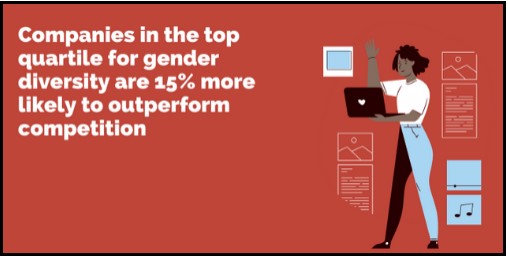
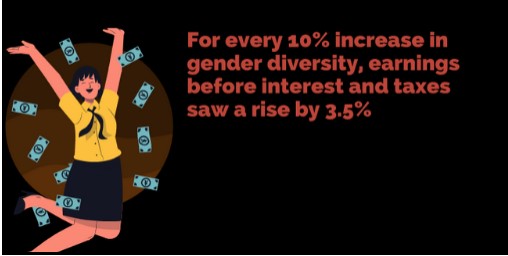
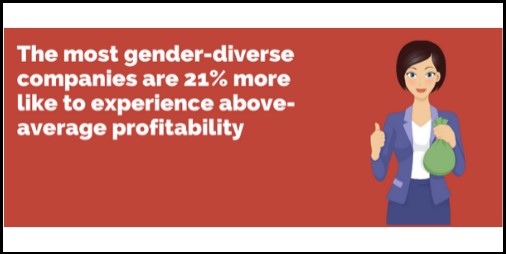
And that’s because women have emerged as more effective leaders in today’s world. There is no dearth of research on how women score equal or higher in most leadership skills. Women have proved to be better leaders during crises, including in managing the recent COVID-19 pandemic.
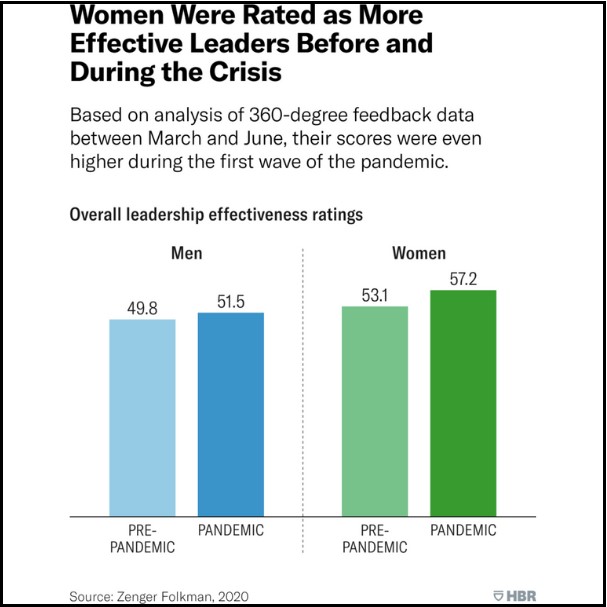
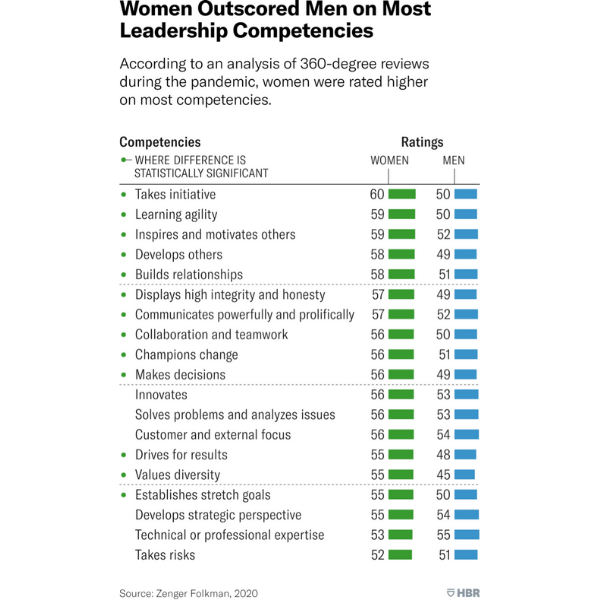
So you may ask what’s the issue?
As you discovered in this article, we have troves of data on how women leadership has proved to be more effective and that their presence leads to real business impact.
Unfortunately, the one place we wish we had better data to share is women’s representation in the workforce especially in women leadership positions.
- Women represent 45% of the S&P 500 workforce, but only 4% are CEOs.
- Globally, women hold just 24% of senior women leadership positions
- In a study of nearly 22,000 publicly traded organizations worldwide, 60% have no female board members.
Why is women's representation at work dismal?
A one size fits all approach does not work for women professionals as they find themselves confronted with some unique challenges at work.
In our conversations with women professionals, we hear them articulate so many of these challenges that are well-documented through research:
- Women leaders find themselves in a ‘double bind’ when gender stereotypes end up binding them in difficult situations
a. They are seen as too soft (likeable, but incompetent) or too tough (competent, but unlikeable) but never just right
b. The ‘think leader, think male’ mindset creates an invisible barrier for women where women leaders work twice as hard as men for the same recognition - “Senior-level women are also nearly twice as likely as women overall to be ‘Onlys’ -the only or one of the only women in the room at work. They are more likely than women who work with other women, to feel pressure to work more, and to experience microaggressions, including needing to provide additional evidence of their competence.”
- There are studies on how people and companies commonly misinterpret displays of confidence as a sign of competence, which tends to put men at a position of advantage as they come across as more confident
- COVID-19 pandemic has further intensified challenges that women already faced. Senior-level women are significantly more likely than men, at the same level, to feel burned out and under pressure to work more, and “as though they have to be ‘always on.’” They are 1.5 times more likely, than senior-level men, to think about downshifting their role, or leaving the workforce altogether due to the pandemic. Almost three in four cite burnout as the main reason.
- Women leaders find themselves in a ‘double bind’ when gender stereotypes end up binding them in difficult situations
What do we need to do to address this issue?
While we can’t change the world, we can certainly enable and empower women leadership professionals to navigate through these realities with the courage, confidence and the right skill-sets. What’s needed is to enable women to discover their authentic voice and lead their life with balance, fulfillment and growth.
If the challenges facing women leadership professionals are different, the solutions too need to be tailored to their specific needs.
Interested to know what these solutions can be? Read-on!
How Evolve is helping women leadership grow in their journeys?
Non-customized leadership journeys rarely work because they don’t factor in the realities of women in the corporate world. The realities of the 21st century post-pandemic world have added further complexities to women leadership journeys that require to be recognized and acted upon by organizations.
Based on these insights, we have been working with several global corporations through Evolve, our unique offering tailored to the needs of their women leadership professionals across ranks and functions.
Evolve by TransforMe is a transformational development journey for women leadership professionals, created to address these realities and unique challenges faced by them. Evolve catalyzes an internal journey that helps women professionals evolve and unleash their fullest potential by:
- Getting in touch with their authentic self
- Recognizing their internal barriers and
- Discovering skills to elevate their growth
For Diversity, By Diversity
This unique learning journey is designed by a team that breathes Diversity &Inclusion. It is led by world-class facilitators with decades of experience in D&I work.
Apart from deep expertise, it is the values that this team, led by women and men representing varied ethnic backgrounds, LGBTQ+ and unique cultural backgrounds, brings on-board that adds authenticity to the journey.
Rooted In Research, Leveraging Unique Methodologies
We leverage primary and secondary research to gain a deeper understanding of the real challenges faced by women professionals. The Evolve learning journey is designed using pattern-breaking transformational methodologies like T-group, Gestalt, Neuroscience, Projective cards and more.
Inspired by the work of thought leaders such as Brene Brown, Sheryl Sandberg among others, Evolve helps women leadership recognise and realise their potential.
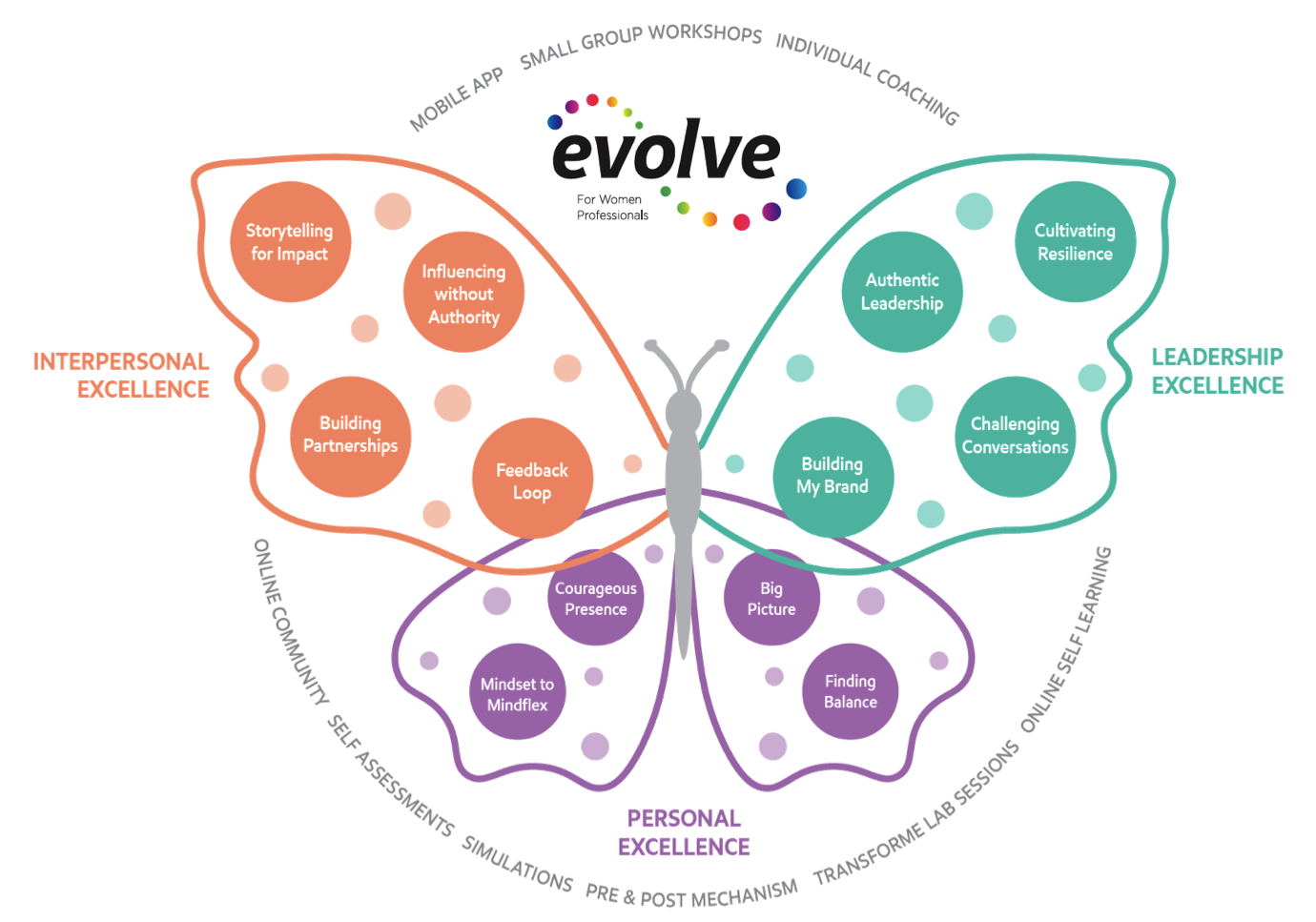
Evolve Framework
Take a look at the Evolve framework optimised to create breakthrough experiences at every stage enabling women professionals to drive real change.
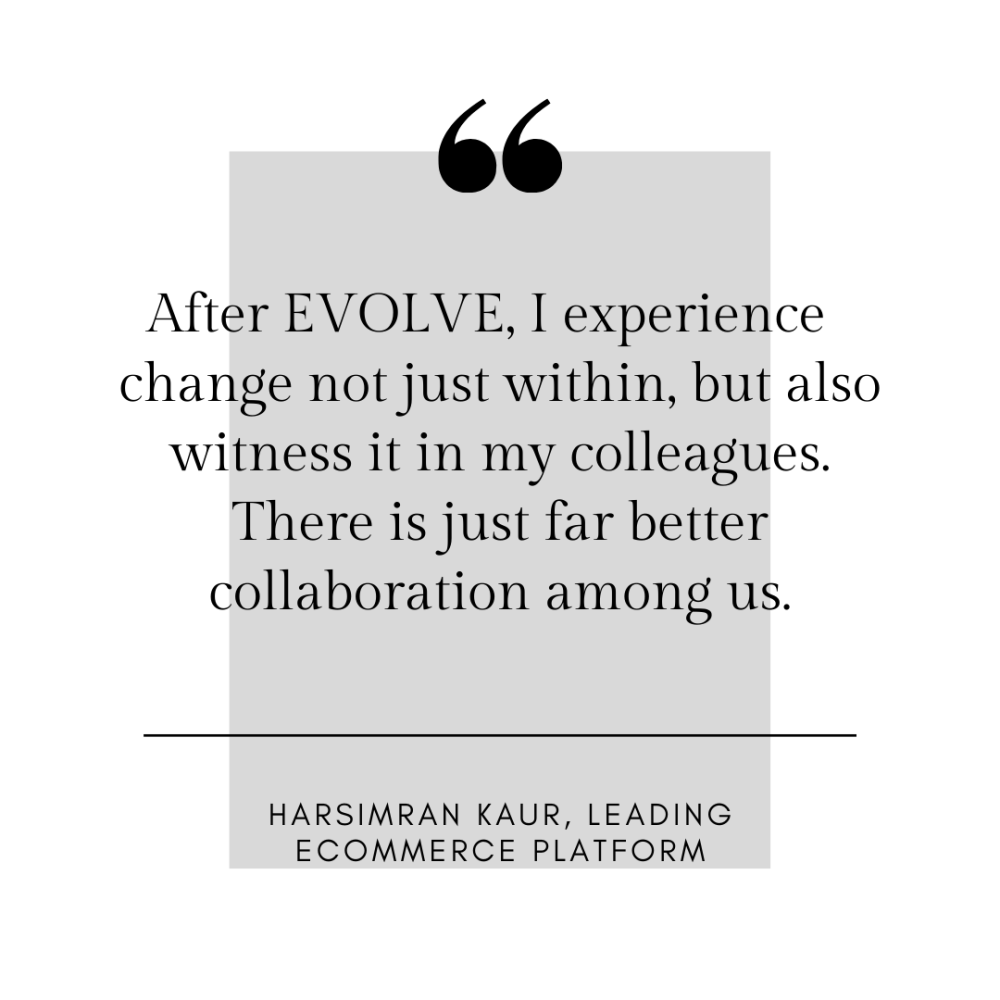
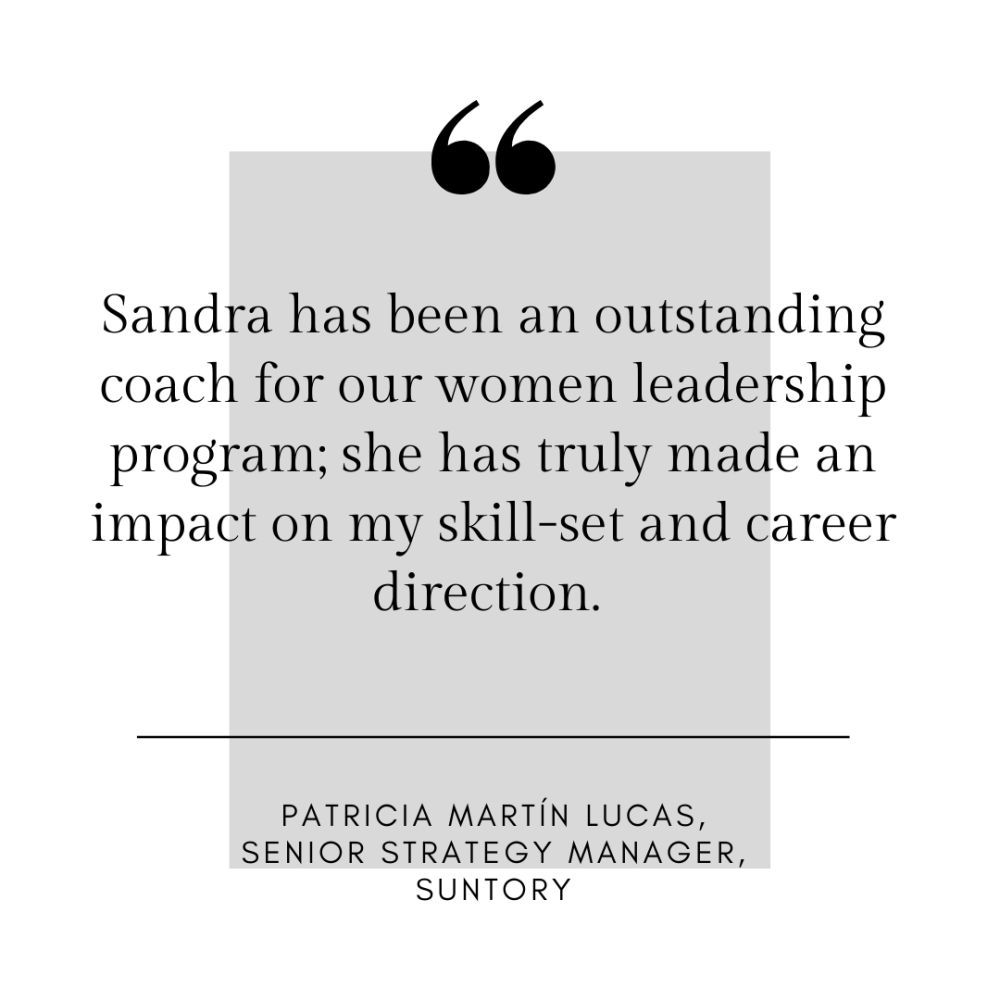
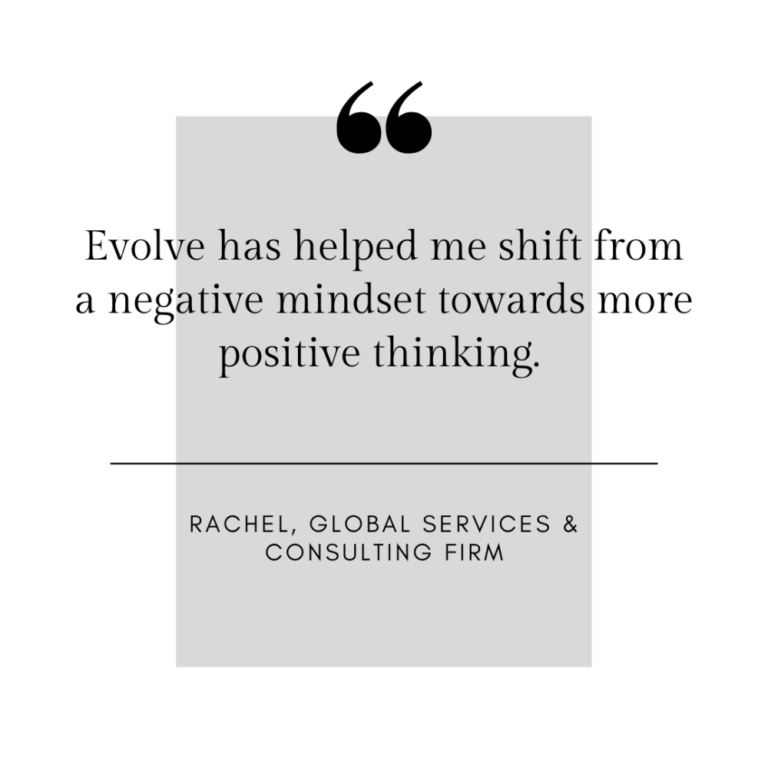
Here is what some of the women professionals who have been on this journey with us have shared about their experience.
What are your goals when it comes to nurturing a gender-diverse team?
What are the challenges in the path of women professionals in your organization?
If you would like to learn more about creating a meaningful learning journey for your team of women professionals or if you simply want to chat about your experiences and challenges, write to us at connect@transformelearning.com.
Stay inspired, visit us on our website, join us on Facebook and LinkedIn.
In this conversation, we will have a unique perspective on the topic of coaching . We have Rakesh Negi, Senior Vice President – Business Operations, FCM Travel who has over 22 years of experience in the travel industry. He will share his perspective on how Coaching has unleashed him.
Summary
- The conversation is between Sandra Colhando and Rakesh Negi, who has been coached as a leader in his organization.
- Rakesh was introduced to coaching six years ago by his CEO, and initially had reservations about whether he needed it.
- He realized that coaching is about asking questions to help the coachee find their own path and take ownership of their journey.
- Rakesh found coaching to be a valuable gift that helped him gain self-awareness, confidence, and make sustained changes in his personal and professional life.
- To create a successful coaching environment, it’s important for sponsors to clearly articulate goals and dispel myths about coaching, while coachees need to approach coaching conversations without anxiety or fear of failure. There is no such thing as a bad coach, but finding the right coach for a particular situation is important.
Sandra Colhando:
As a leader who has been coached, can you walk us through how you first got introduced to coaching and what was going through your mind at the time?
Rakesh Negi:
Interesting one and frankly I didn’t know about coaching at all. It was some six years back when I was working on my work desk and my CEO tapped on my shoulder and said, let’s talk, that’s the first time he said “As an organisation, for your development, we’re going to assign you coaching and assign you up with the coach.”
I wasn’t sure what this is because as a person, I’ve always seen myself as somebody who makes a difference quickly and always in the top of the working cadre, it was almost like a bomb was dropped on me. Do I need coaching, that’s the question that came into my mind. And maybe because my CEO was very well aware, he saw that big question mark on my face and he started explaining how and what is going to be the entire concept and how is it going to help me? I’m glad that I had that kind of unflinching trust on him that I went ahead in the journey and of course after that it was my coach, which is you in this case, which helped me give me that confidence and I was able to carry on with the journey.
Sandra:
One myth about coaching is the belief that being coached means you’re not doing well enough. This is not the case, as coaching is an expensive intervention that organizations invest in for high potential individuals they want to grow within the organization.
Rakesh Negi:
In fact, I would say in the first two sessions only I was able to clearly see in my mind that there are not one, not two, but three forces working for my development one definitely organisation, one my CEO and one of course my coach, all I need to do is just plunge into this and just run with this journey.
Sandra Colhando:
As a leader who has been coached, can you walk us through how you first got introduced to coaching and what was going through your mind at the time?
Rakesh Negi:
Interesting one and frankly I didn’t know about coaching at all. It was some six years back when I was working on my work desk and my CEO tapped on my shoulder and said, let’s talk, that’s the first time he said “As an organisation, for your development, we’re going to assign you coaching and assign you up with the coach.”
I wasn’t sure what this is because as a person, I’ve always seen myself as somebody who makes a difference quickly and always in the top of the working cadre, it was almost like a bomb was dropped on me. Do I need coaching, that’s the question that came into my mind. And maybe because my CEO was very well aware, he saw that big question mark on my face and he started explaining how and what is going to be the entire concept and how is it going to help me? I’m glad that I had that kind of unflinching trust on him that I went ahead in the journey and of course after that it was my coach, which is you in this case, which helped me give me that confidence and I was able to carry on with the journey
Sandra:
One myth about coaching is the belief that being coached means you’re not doing well enough. This is not the case, as coaching is an expensive intervention that organizations invest in for high potential individuals they want to grow within the organization.
Rakesh Negi:
In fact, I would say in the first two sessions only I was able to clearly see in my mind that there are not one, not two, but three forces working for my development one definitely organisation, one my CEO and one of course my coach, all I need to do is just plunge into this and just run with this journey.
Rakesh Negi:
I wanted to avoid being remembered as a ‘reluctant’ leader, which made me realize that I lacked confidence and was not claiming my own space. Coaching has been the greatest gift I’ve ever received, helping me both professionally and personally. It has been a realization on both sides, making it the best gift.
Sandra Colhando:
This may be a rhetorical question. Does coaching actually work? Did you feel coaching and able to bring some real shifts and not just real shifts, but sustained change in your life?
Rakesh Negi:
I wanted to do philanthropy in my hometown, but never acted on it until my coach helped me set a goal. I was able to accomplish it before turning 40 and it continues to bring me happiness. Coaching also heightened my self-awareness, allowing me to recognize and correct my mistakes. This led me to seek coaching again, and the second time was even more successful since I was already aware of the journey
Sandra Colhando:
I connect with the idea that everyone needs a coach at different times for different situations. I’ve had coaches in different phases of my life and I believe even the best athletes need coaches. I personally need help wherever it’s required and having an external, non-judgmental perspective can be invaluable.
I had an Aha moment that changed my whole perspective on silence. I grew up believing silence is golden, but a mentor and coach, Dr. Prabhakar Kamath, taught me that silence can be hurtful. This one statement shook me and made me realize that staying silent can actually do more harm than good. Now, I remind myself to speak up when it’s necessary, even if it means supporting someone at the cost of my relationship with another person.
Rakesh Negi:
Taking ownership of your own situation is important, and during our discussions, I learned how to separate a person’s behavior from who they are. It’s essential to talk openly with them and manage conflicts positively.
Sandra Colhando:
How can organisations or leaders create an environment for coaches to succeed?
Rakesh Negi:
To ensure a successful coaching intervention, the sponsor must clearly articulate the goals and objectives. Additionally, it’s important to have a mirror, either the coachee or someone within the organization, to ensure progress is being made. It’s crucial to dispel any myths about coaching, such as it being a precursor to termination, by openly discussing the purpose and benefits of coaching. This will ensure people understand that coaching is about personal growth and development.
Sandra:
That’s a great starting point. When the coachee understands that the intention is for their success and development, they can approach coaching conversations without anxiety or fear of failure. They can focus on the process, trusting that the environment will take care of the outcomes.
Sandra Colhando:
Is there a bad coach? With so many coaches out there and now, who are qualified and who may tick all the boxes – How does one go about picking the right coach for themselves?
Rakesh NegI:
As a coach, I don’t know if I’m the right person to answer this, but in my opinion, there’s no such thing as a bad husband or wife. There can be a bad marriage, but the starting point for any person seeking coaching is to be coachable and self-aware.
From my perspective, as long as a person is genuinely interested in their personal growth and development, they cannot be considered “bad”. As coaches, we are trained to work with all types of individuals and personalities. While some people may initially be resistant to coaching, it’s possible for them to become coachable at some point in their journey.
I often share an anecdote with my clients – forced change is only liked by an infant who has wet the nappy, otherwise, nobody likes forced change. It’s important to recognize that change is a process and individuals need to be open to it in order to truly benefit from coaching.
Sandra Colhando:
What are three cues to identify the right coach for yourself?
Rakesh Negi:
To find the right coach, it’s not about three things but more about the coach’s interest in your journey, which can be determined within 5 to 10 minutes of talking to them. It’s about seeing if the coach is willingly listening, interested in you, and running the journey with you, allowing for open communication.
Rakesh:
Dating and coaching are similar in that you can usually tell within the first 15-20 minutes if there is a connection. It’s more about the emotional connection and confidence you feel from the coach rather than their profile. Being intuitive works better than just looking at their profile.
Sandra Colhando:
When looking for a coach, it’s more important to focus on how you feel around them rather than their experience or profile. Ask yourself if you feel safe and comfortable with the coach and if you can have multiple conversations with them. Don’t limit yourself to coaches with the same experience as you, as coaching is about unlocking potential rather than finding a mentor. Look for a coach who can walk the journey with you, create a safe space for exploration, give honest feedback, and push you when needed.
Sandra Colhando:
What are the signs of successful coaching that one should look for?
Rakesh Negi:
Congratulations on reaching this point, now it’s time to trust the coaching process and your unique talents. A good coach will guide and challenge you, and it’s important to have someone you trust to hold you accountable and reflect your progress. This will help you get the most out of coaching and create positive change in your life.
Sandra Colhando:
I’ve never met anyone unhappy with coaching. Having a trusted mirror can help people acknowledge and reflect on the changes they are making, especially when they want others to notice too.
Rakesh Negi:
I learned a technique from my coach about keeping anchors, and I still use it today. One of my anchors is a picture of a waltz dance that I keep. Another anchor is the phrase “that’s a beautiful story,” which reminds me how to use words effectively in conversations and negotiations. I even shared a time when I used this technique with my coach and received positive feedback.
Sandra:
Would you like to share with the larger group that wants an analogy, the story. What does waltz mean?
Rakesh:
I wasn’t sure how to talk to a customer without offending them. The waltz analogy of taking one step forward and one step back was shared with me, and it’s a beautiful way to approach conversations. By giving and pulling back, the other person feels in control and it creates a positive dynamic. It takes two to tango, and this approach helps build trust and rapport with customers.
Sandra Colhando:
What are your thoughts on coaching through a tech platform, such as AI or picking a coach profile from a platform, and where can one find a coach if not through corporate sponsorship
Rakesh Negi:
Recently, a close friend who lost his job reached out to me for coaching. While Google can provide answers, I believe it’s important to find a coach who offers a human touch and emotional support. Bots and systems lack this important aspect. I suggest reaching out to your larger circle for a coach, as they can offer a more authentic and personal experience.
How Can Managers Become Coaches
Sandra Colhando:
Can managers be taught to become coaches, or are coaches different from mentors?
Rakesh Negi:
We need more coaches than managers in today’s talent world. Managers should focus on coaching their people rather than managing them. It’s doable and managers can be trained to become coaches. Coaching gives clarity of larger goals and allows talented individuals to know what needs to be done.
Sandra Colhando:
Mentoring and coaching are distinct from each other, and as a manager, it’s easier to mentor as you can guide from experience. Coaching requires time, patience, and a specific skill set, which can be challenging for managers who are busy with deadlines. However, both skills are important and have their timing. It’s crucial to have the necessary skill set for coaching.
Sandra Colhando:
Are external coaches preferred compared to Internal coaching in organization?
Rakesh Negi:
Both internal and external coaches can be effective, but the external coaches may have a slight edge because they are not as involved in the day-to-day work of the coachee.
Sandra Colhando:
Both internal and external coaches have their own space and importance. While internal coaches can cover more people who may not have access to external coaches, external coaches can provide a specific skill set, speed or a massive shift in a person or group of leaders. So, it’s a great combination between the two.
In the 3rd edition of The Leaders’ Cafe, we invited our fellow coach Francisco Ramirez and Founder, OkaySo, a non-profit based out of New York that combats shame, stigma and misinformation working on LBTQIA+ inclusion. This conversation on the sidelines of the PRIDE month focused on the importance of LGBTQIA+ inclusion in the workplace.
Summary
Francisco highlighted that true participation in the PRIDE movement requires listening to the voices of the community, including their personal struggles and aspirations. They highlighted the struggles queer youth face in gaining acceptance and the need for compassion. They discussed common mistakes organizations make in supporting the LGBTQIA+ community, such as performative support and focusing only on celebration instead of advocacy. Francisco suggested some initiatives organizations can take to promote inclusion, such as policies against discrimination and gender-neutral job postings. They also offered tips for individuals to become allies, including recognizing their own knowledge gaps and using appropriate pronouns. Lastly, Francisco addressed how to respond to homophobic comments, emphasizing the importance of acknowledging one’s own feelings and taking action to challenge harmful behavior.
Chat Brief
A common mistake that organisations make is in thinking this work is just a celebration. Sure, we should celebrate who we are but it’s NOT a celebration when we still don’t have rights.
The last few years have witnessed a growing awareness about the importance of LGBTQIA+ inclusion in key social spaces and most importantly the workspace. The PRIDE month in June at its best becomes an opportunity for organisations to renew their commitment to the issue, announce a slew of benefits and policies to ensure that the LGBTQIA+ community is well represented and respected within workspace.
The advocates and supporters of the PRIDE movement have also felt sceptical about the phenomenon of rainbow marketing where the gravity of the issue is lost amidst buzzy promotions.
We believe that the route to authentic participation in the PRIDE movement lies in listening to the voices from the community – their personal history, their present struggles and triumphs, their dreams for the future and their hopes and expectations from society.
We were privileged to host one such insightful conversation with an inspiring leader from the LGBTQIA+ community who distilled their own personal struggles and emerged as a role model, guide and a leadership coach not just for the community but for all those seeking to reach their potential support in life. In June, Sandra Colhando, our colleague and Co-Founder at TransforMe spoke with Francisco Ramirez, Founder, OkaySo, a non-profit based out of New York that combats shame, stigma and misinformation.
Here are a few excerpts from the conversation.
Choosing identities
Francisci spoke about how struggle for self and social acceptance is a part of every teenager’s journey and they witnessed personally how magnified this struggle for acceptance is as a queer youth as they came out at an age of 15 years. They shared how majority of queer youth have contemplated or attempted suicide signaling the gravity of community’s exclusion and its painful consequences.
Francisco started the conversation with a positive affirmation for every person from the community who experiences the struggle – “We can do this. You can do this.”
A key moment in the conversation was an insightful question by Sandra – “From being told to not come out completely to being someone who understands others completely – how have you bridged that distance?” . As Francisco shared later in the conversation, “Compassion is our biggest superpower”
Common mistakes that organisations make
Francisco spoke about two common mistakes that organisations make vis a vis the LGBTQIA+ community and the PRIDE movement. They pointed out how support has become ‘performative’ , how social media handles of different organisations portray their support, specifically in the month of June, yet do little to help the cause. They spoke about the need to support the movement through the year.
The second point that they shared is, “a common mistake that organisations make is in thinking this work is just a celebration. Sure, we should celebrate who we are but it’s NOT a celebration when we still don’t have rights.
What organisations can do to make LGBTQIA+ inclusion real?
Francisco spoke about a range of initiatives that organisations can take for LGBTQIA+ inclusion at work. Some of the key aspects they spoke about were:
- Policies to address discrimination, bullying and exclusion
- Dress code, signages on bathrooms.
- Recruitment based on skills and knowledge instead of prioritising who you are and identify as.
- Gender neutral job postings.
- Challenge gendered language and using appropriate pronouns
What can individuals do to become an Ally?
Francisco offered some very actionable steps through the conversation. One simple but powerful step that they offered for any individual wanting to make a difference is:
`Recognize where you are.’
They spoke about the need to understand where our current gaps lie – example in awareness about the spectrum of identities or in the appropriate language to address them respectfully and then working towards raising awareness and learning to fill those gaps.
They spoke about the need to be honest, to not be scared of making a mistake and how even the acknowledgement of a mistake can signal the sincere intent to participate in the journey of fostering inclusion.
About the role of language and need for using the right pronouns
Francisco made a powerful point here sharing how – “the language of ladies and gentlemen is so ingrained that I have heard many people say what a chore it is to change and relearn and sure it takes thinking and conscious effort but I would say what an opportunity to try to be more inclusive.”
Addressing a question on how to ask people how they like to be identified as, Francisco had a simple suggestion. They shared that we can request other people to share their preferred names and pronouns.
On responding to homophobic comments
When people say these sorts of things, it’s not because they are inherently bad but because they have been socialised to believe whatever they believe. So there is an opportunity for joint gesturing, offering support. You can do this by first recognising your reaction, validating your own feelings, gathering your thoughts to feel strong to take action and finally name what you see.
Francisco highlighted the importance of tuning in to our own reactions and responses, centering and acknowledging how the comment made us feel and then taking the courage to share the feelings it brought forth (“sorry that doesn’t sound right, “umm did I hear that right”). They made an interesting point about how dissent can be shared in varied ways including through vocal fillers.
Conclusion
We are excited about building some of Francisco’s ideas and actionable insights in our own work and in helping our colleagues, partners and clients in their journey of raising awareness, becoming more empathetic and open and driving behavioural change to become the best version of ourselves.
We do hope you find them valuable in your journey towards Inclusion.

TransforMe Learning is a globally focused leadership training and coaching company in India. We provide leadership training, executive coaching, and team transformation to better prepare individuals and organisations for the future of work.
©2026 All Rights Reserved